Exploring Meta AI: Your Gateway to Effortless AI-Driven Solutions
Introduction to Meta AI
Meta AI represents a significant advancement in artificial intelligence, serving as a comprehensive platform that streamlines tasks through intelligent automation. The purpose of Meta AI is to equip individuals and businesses with the tools to harness AI efficiently and effectively. By integrating cutting-edge technologies, Meta AI facilitates a range of applications that enhance productivity and foster creativity.
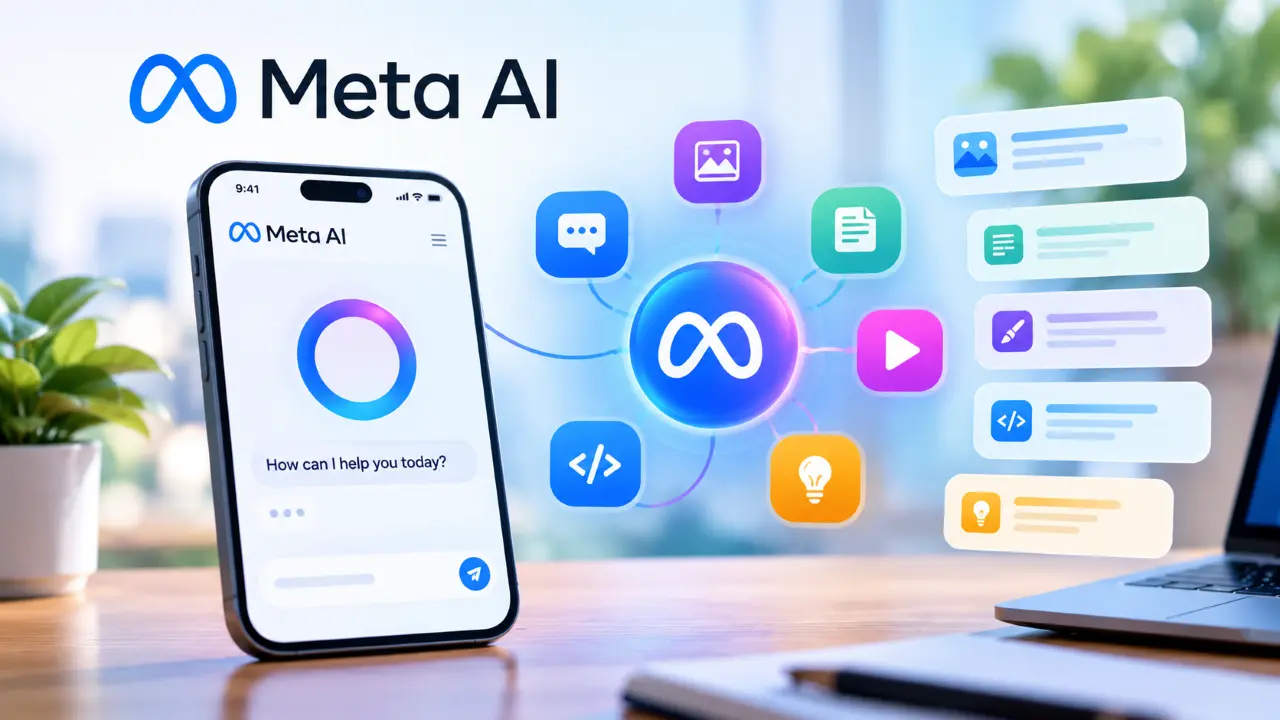
One of the core features of Meta AI is its user-friendly interface, which enables users with varying levels of technical expertise to engage with complex AI solutions more easily. This accessibility is crucial in today’s rapidly evolving digital landscape, where the ability to adapt to new technologies can significantly impact success. Meta AI’s tools encompass a wide spectrum of capabilities, including natural language processing, image recognition, and data analytics, each thoughtfully designed to support a myriad of use cases.
Embracing AI technology, such as Meta AI, is increasingly essential for individuals and organisations alike. As automated solutions continue to gain traction, leveraging AI can lead to more informed decision-making, enhanced customer experiences, and streamlined operations. Businesses that adapt to this technological shift not only position themselves competitively but also unlock new opportunities for growth and innovation.
Moreover, the relevance of Meta AI extends beyond just operational efficiencies; it embodies the potential for transformative change within the workforce. By enabling employees to focus on strategic tasks rather than repetitive processes, Meta AI empowers users to harness their creative potential, ultimately leading to a more engaged and motivated workforce. Thus, understanding and utilising Meta AI is paramount in navigating the future of work and maximising the benefits of artificial intelligence.
Key Features of Meta AI
Meta AI stands out in the landscape of artificial intelligence by offering a variety of innovative features designed to enhance productivity and streamline workflows. One of its most notable capabilities is generating AI-assisted images. This feature allows users to create high-quality visuals effortlessly, catering to both creative projects and business needs. Users can input their desired themes, styles, or concepts, and Meta AI produces images that align with these specifications. This not only saves time but also fosters creativity by providing fresh ideas and visual content at a moment’s notice.
Another significant feature of Meta AI is its ability to provide instant answers to user queries, much like a virtual assistant. This capability enhances information retrieval processes across various spheres, including academics, business, and daily tasks. Users can ask questions in natural language, and the AI quickly accesses vast databases to deliver accurate and relevant information. This immediate support is particularly valuable in situations that require prompt decision-making, enabling users to focus on more strategic aspects of their projects.
Moreover, Meta AI enhances task management through various tools that streamline workflows. Users can employ the AI to set reminders, prioritise tasks, and organise schedules effectively. This feature helps individuals maintain productivity and consistently work towards their objectives. By integrating these tools into daily routines, users can reduce cognitive overload, allowing them to concentrate on more complex problem-solving and innovative thinking.
Overall, the key features of Meta AI position it as a powerful ally for delivering effortless AI-driven solutions, catering to the needs of both creative professionals and individuals seeking greater efficiency in their daily activities.
How to Use Meta AI Efficiently
Utilising Meta AI effectively requires a structured approach that helps users understand the platform’s features and integrate it seamlessly into everyday tasks. To maximise your experience with Meta AI, follow these practical tips and strategies that facilitate a more productive workflow.
First, familiarise yourself with the user interface. Spend some time exploring the dashboard and learning how to access features such as natural language processing, data analytics, and machine learning tools. Meta AI provides a robust help section that can guide you through the basics. This initial step ensures you are comfortable navigating the platform, increasing your overall efficiency.
Next, take advantage of the customisation features offered by Meta AI. Personalising settings and preferences enables the platform to tailor responses to your specific needs. This might include setting preferred communication styles or selecting particular areas of focus within the AI capabilities. By aligning Meta AI with your unique requirements, you enhance its efficacy in providing relevant solutions.
Incorporating Meta AI into your daily routines involves using its capabilities to streamline various tasks. For example, you can automate repetitive activities, such as data entry or report generation, which can save you time and minimise errors. Utilise the platform to set reminders, manage schedules, or even assist in brainstorming sessions where its insights can enhance creativity and productivity.
Additionally, engage regularly with the community and forums associated with Meta AI. Connecting with other users can provide valuable insights, tips, and innovative approaches to utilising the platform that you may not have considered. This engagement not only fosters learning but also helps troubleshoot issues that might arise during use.
By following these strategies and utilising the available resources, you can enhance your proficiency with Meta AI, making it a powerful ally in achieving your goals.
The Impact of AI-Generated Content
The advent of AI-generated content has significantly transformed both creativity and productivity in various sectors. Tools like Meta AI empower individuals and organisations to create visually striking images and compelling narratives at an unprecedented pace. By leveraging these advanced algorithms, content creators can shift their focus from mundane tasks to more strategic ones, allowing for greater innovation and creative expression.
One of the most remarkable implications of AI-driven solutions is the enhancement of marketing strategies. Companies are increasingly utilising AI-generated content to craft tailored messages that resonate with target audiences. By analysing consumer data, AI tools can generate personalised content that not only captures attention but also drives engagement. This capability streamlines the content creation process, reducing the time and resources required while maximising output quality.
Furthermore, the integration of AI into design has ushered in a new paradigm in how visual content is approached. With Meta AI, designers can harness automation to rapidly generate design concepts, variations, and prototypes. This not only increases efficiency but also opens avenues for experimenting with styles and themes that may not have been feasible to implement manually. The push towards AI-generated images and designs encourages unique visual storytelling that reflects diverse perspectives and ideas.
Despite the numerous advantages offered by AI-generated content, it raises critical questions about authenticity and originality. The proliferation of AI tools necessitates a careful balance between technological innovation and the preservation of human creativity. As generative algorithms continue to evolve, understanding their role in the creative process is essential to maintaining content integrity in the digital age.
Meta AI in Action: Real-Life Applications
Meta AI has emerged as a powerful tool across various industries, illustrating its capability to enhance operational efficiency and drive innovation. In the healthcare sector, for instance, Meta AI is used to analyse medical records and predict patient outcomes, thereby aiding healthcare providers in making informed decisions. By employing natural language processing, Meta AI can sift through vast amounts of data, identifying patterns that lead to improved patient care and optimised treatment plans.
In the realm of finance, businesses use Meta AI to detect fraud and assess credit risk. Financial institutions benefit from real-time analytics and predictive modelling, which enable them to respond proactively to suspicious transactions. With Meta AI’s advanced algorithms, banks can reduce losses and enhance security, resulting in a robust financial environment that safeguards customer assets.
Moreover, the marketing sector has embraced Meta AI to refine customer targeting strategies. By analysing consumer behaviour and preferences, marketing teams can tailor campaigns to specific demographics, enhancing engagement and retention rates. Personalisation powered by AI has proven to resonate with consumers, leading to increased conversion rates and improved brand loyalty.
Small businesses have also found innovative ways to integrate Meta AI within their operations. Entrepreneurs leverage AI-driven tools for automating customer service responses, using chatbots to provide customers with immediate assistance while freeing up human resources for more complex inquiries. This integration has significantly improved customer satisfaction and operational efficiency.
These examples showcase the versatility and effectiveness of Meta AI, revealing its extensive applicability across diverse sectors. As more enterprises harness the power of AI, the potential for transformative change in workflows and processes becomes increasingly apparent, cementing Meta AI’s position as a pivotal element in the technological landscape.
Comparing Meta AI with Other AI Tools
In the expanding landscape of artificial intelligence, several tools and platforms vie for prominence. Meta AI, developed by Meta Platforms Inc., offers unique capabilities that set it apart from other leading AI tools, including Google AI, Microsoft Azure AI, and IBM Watson. Each of these platforms has its strengths and weaknesses, making the choice between them contingent on user needs and specific application scenarios.
Meta AI is particularly renowned for its user-friendly interface and robust integration capabilities within the Meta ecosystem, which includes services like Facebook and Instagram. This seamless integration allows businesses to leverage AI-driven insights while maintaining a familiar operational framework. Additionally, Meta AI’s strengths lie in processing vast amounts of visual and textual data, making it ideal for tasks that require deep learning. However, while it excels in certain areas, some users have noted that it lacks the extensive customisation options found in other AI tools like IBM Watson, which is known for its flexibility in adapting to specific business contexts.
On the other hand, Google AI stands out for its advanced machine learning algorithms, offering significant scalability and adaptability through cloud-based solutions. This is advantageous for enterprises seeking to deploy AI across various applications without the limitations of on-premises infrastructure. Nonetheless, its complexity can pose a barrier for smaller businesses or individuals who may require straightforward, out-of-the-box solutions.
In contrast, Microsoft Azure AI provides comprehensive ecosystem support, particularly for enterprises already embedded within Microsoft products. It offers extensive tools for data management and development, making it suitable for companies with the resources to delve into AI development. However, it may be overwhelming for users who are new to AI or prefer a more guided experience.
Ultimately, the choice between Meta AI and other AI tools will depend largely on specific use cases, user familiarity, and required integrations. By evaluating these factors, users can make informed decisions tailored to their unique requirements.
User Experience and Community Feedback
Meta AI has garnered significant attention from users across various sectors, primarily due to its intuitive interface and robust functionality. Feedback from the user community highlights an overall positive experience, particularly its user-friendly design, which enables individuals with varying levels of technical expertise to access and utilise its tools effectively. Many users have praised Meta AI for its velocity in processing tasks and seamless integration into existing workflows, reducing the time required to generate AI-driven solutions.
However, the platform has not been without its criticisms. Some users have pointed to occasional responsiveness issues and the need for improvements in its natural language processing capabilities. Instances were reported in which the AI struggled with context, resulting in outputs that did not align with user expectations. In particular, while many found the AI helpful in generating content and offering suggestions, others expressed the need for enhanced calibration options to enable more personalised interactions.
User feedback has also emphasised the importance of ongoing support and documentation. While many users found Meta AI’s resources satisfactory, some felt that more comprehensive guides and tutorials would greatly assist them in utilising the platform’s full potential. The community is actively engaged in discussions about best practices and troubleshooting, which contributes to an evolving ecosystem where users can share their insights and strategies.
In light of these observations, it is clear that while Meta AI delivers substantial advantages in facilitating AI-driven tasks, continued enhancements and community engagement will be essential to address the issues raised. This iterative process will ensure that Meta AI remains a pivotal resource for users seeking AI solutions, fostering satisfaction and greater connectivity in its use.
Future of Meta AI and AI Technology
The landscape of artificial intelligence is continuously evolving, with Meta AI at the forefront of these advancements. Over the coming years, we can anticipate significant breakthroughs in AI technology that will transform various aspects of our daily lives. One of the emerging trends is the growing integration of AI into workplace operations, enabling businesses to harness automated solutions to improve efficiency. With tools powered by Meta AI, organisations will likely experience unprecedented productivity gains as routine tasks become more streamlined.
Another noteworthy development is the refinement of natural language processing capabilities. As Meta AI advances, its ability to understand and generate human-like language will improve, consequently enhancing communication between humans and machines. This evolution will not only facilitate more intuitive user interactions but also contribute to the growth of voice-activated AI systems in homes and workplaces. Furthermore, the democratisation of AI technology will enable individuals and small businesses to access sophisticated tools that were previously limited to larger corporations.
Ethics and responsible AI deployment are set to be pivotal topics in the future of AI technologies. As Meta AI continues to push the boundaries of automation and decision-making, discussions surrounding data privacy, bias mitigation, and ethical considerations will become increasingly essential. Societal acceptance will play a crucial role in determining how these technologies are implemented and regulated. It is vital for policymakers, developers, and users to collaborate and establish frameworks that ensure AI is used responsibly.
In conclusion, as we look to the future, the potential advancements in Meta AI and broader AI technologies promise to reshape various sectors. By embracing innovation while addressing ethical concerns, society can harness AI’s full potential to drive progress, enhance efficiency, and ultimately improve the quality of life.
Conclusion: Embracing the Power of AI with Meta
As we conclude our exploration of Meta AI, it becomes evident that this innovative technology serves as a crucial tool for harnessing the potential of artificial intelligence across various domains. Meta AI stands out with its ability to provide users with efficient, effective, and intelligent solutions that cater to a myriad of needs. By integrating artificial intelligence into everyday tasks, individuals and businesses can dramatically enhance their productivity levels, automate processes, and make data-driven decisions with ease.
The benefits of embracing Meta AI are manifold. For professionals and students alike, the platform’s intelligent features facilitate personal growth by optimising learning and skill acquisition. One can access a plethora of resources and support that aid in understanding complex concepts and improving performance. Moreover, businesses utilising Meta AI can streamline their operations, resulting in reduced costs and improved customer engagement. The adaptability of Meta’s services makes it an appealing choice for organisations looking to remain competitive in an increasingly digital landscape.
In this age of rapid technological advancement, it is imperative to leverage AI tools to stay ahead. As the business ecosystem continues to evolve, those who incorporate AI technologies into their strategies will likely enjoy a significant advantage over their competitors. Meta offers a comprehensive suite of AI-driven solutions, and exploring these options can undoubtedly lead to enhanced outcomes and efficiency.
Ultimately, the journey with Meta AI not only simplifies tasks but also inspires users to innovate, think critically, and adapt. By embracing the power of AI with Meta, you can unlock a world of possibilities that aligns with your professional and personal aspirations. Explore Meta AI today and witness how it can transform your approach to challenges, making the seemingly impossible possible.
© Copyright notes
The copyright of the article belongs to the author, please do not reprint without permission.
Related posts



No comments...